In the fast-paced world of day trading, technical analysis is only half the battle. While charts reveal the price action, the underlying market sentiment tells the story of why those moves happen. To gain a true edge, you must understand the psychology of the crowd. This is where the Fear and Greed Index becomes an indispensable tool. In this guide, I will break down why this index is vital, how its seven core components function, and how I use it alongside the Put/Call Ratio to execute profitable trades.
Why is the Fear and Greed Index Vital?
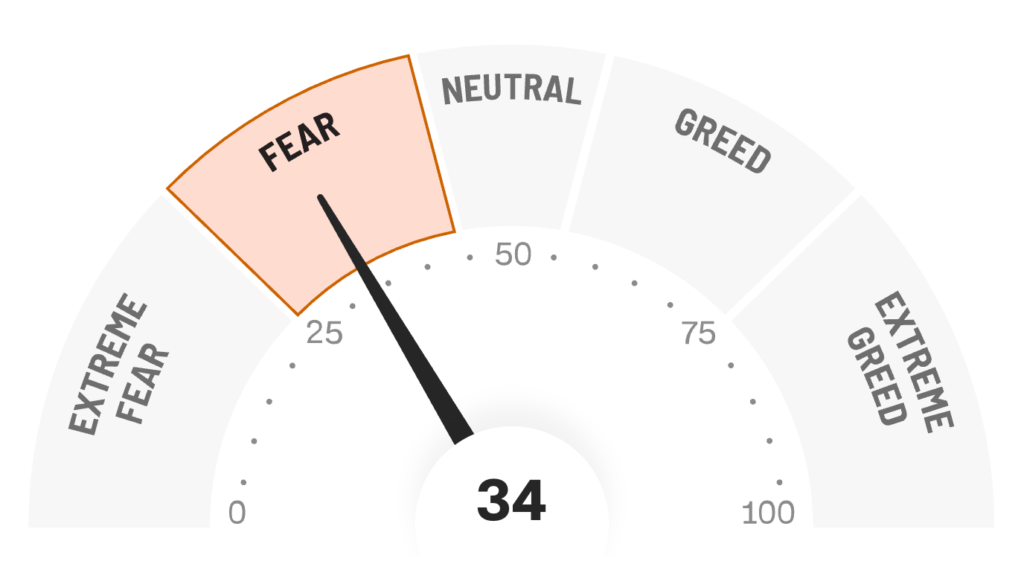
The market is not a rational machine; it is driven by human emotion. As a day trader, I’ve learned that when fear spikes, investors dump stocks regardless of value, creating “oversold” conditions. When greed takes hold, the market climbs a “wall of worry” until it becomes unsustainable. The Fear and Greed Index captures this emotional shift on a scale of 0 to 100. By monitoring this, I can step back from the daily noise and decide whether to be aggressive or defensive. It is the bridge between market psychology and tactical execution, allowing traders to avoid the “herd mentality” that often leads to devastating losses.
The 7 Key Indicators Behind the Index
The Fear and Greed Index is a composite of seven distinct market signals that provide a holistic, multi-dimensional view of the market:
- Stock Price Momentum: Measures the S&P 500 against its 125-day moving average.
- Stock Price Strength: Counts the number of stocks hitting 52-week highs versus lows.
- Stock Price Breadth: Analyzes the volume of advancing stocks versus declining stocks.
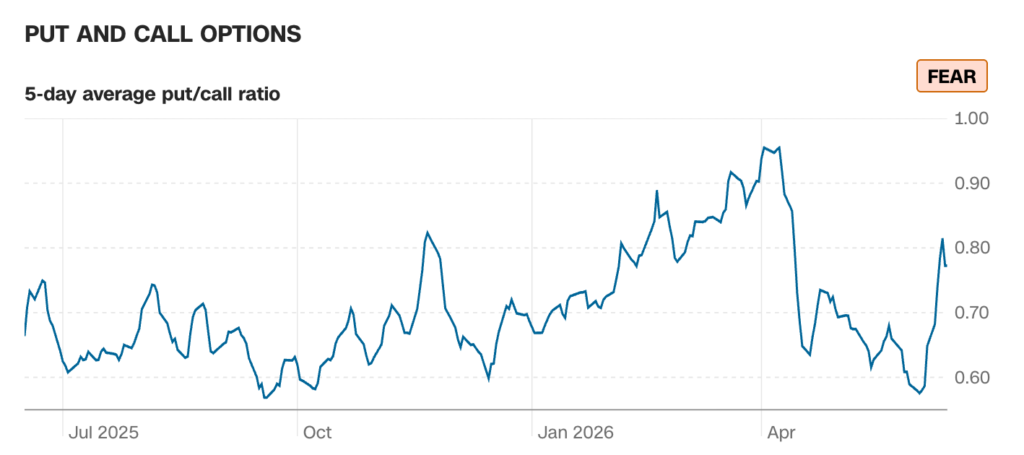
- Put and Call Options: The most critical component. It measures the ratio of bearish bets to bullish bets.
- Market Volatility: Tracks the VIX (The CBOE Volatility Index), which measures investor expectations for market swings.
- Junk Bond Demand: Assesses how much risk investors are willing to take for higher yields.
- Safe Haven Demand: Compares the performance of stocks versus Treasury bonds to see if investors are fleeing to safety.
The Put/Call Ratio: My Secret Weapon
While the Index gives you a broad overview, the Put/Call Ratio acts as the engine under the hood. As an options trader, I consider this the most vital component.
- The 0.60 Threshold (Greed/Top Signal): When the ratio drops below 0.60, the market is heavily weighted toward Call buying. This is a sign of “Extreme Greed.” Historically, this often marks a market top, suggesting that it is time to take profits, tighten stop-losses, or look for shorting opportunities.
- The 1.00 Threshold (Fear/Buy Signal): Conversely, as the ratio moves toward 1.00 or higher, it means investors are rushing to buy Puts for protection or betting on a downside. This reflects rising fear. In my strategy, this level often signals that the market is “oversold,” creating an ideal setup for a potential rebound and a buying opportunity.
Integrating Psychology into Your Trading Routine
Market sentiment is a direct reflection of psychological cycles. When the index is in “Extreme Fear,” the majority of market participants are paralyzed. As a trader, your job is to identify that paralysis. Conversely, in “Extreme Greed,” most participants believe the market can only go up. That is the moment of greatest risk. By mapping the Fear and Greed Index against your technical indicators—such as the Relative Strength Index (RSI) and Moving Averages (EMA)—you can filter out noise and focus on high-probability setups.
Practical Trading Tips for Daily Execution
- Don’t Trade in Isolation: Always cross-reference the Fear and Greed Index with technical tools like RSI and MACD. If the index shows “Extreme Greed” and the RSI is over 70, the probability of a reversal is very high.
- Monitor the Trend: It’s not just about a single-day reading. Look at how the index has moved over the past week. A steady, gradual climb toward 100 is far more dangerous than a sudden, news-driven spike.
- Risk Management is Paramount: Sentiment indicators tell you the probability of a move, not the certainty. Always use stop-loss orders. Even in a “Fear” zone, the market can keep falling; never gamble your entire account on a single sentiment reading.
Final Thoughts: Trade What You See, Not What You Feel
Market sentiment is never constant. just as the tide changes, the market shifts between fear and greed. By consistently monitoring this index, you train yourself to avoid emotioonal traps and become a more disciplined, profitable trader.
Trading is as much about psychology as it is about data. By keeping a close eye on the Fear and Greed Index and specifically analyzing the Put/Call Ratio, you can avoid becoming part of the crowd that buys high and sells low. Remember, the goal is to trade what you see, not what you feel. Keep practicing, track your trades in your journals, and remember that consistent growth comes from understanding the crowd.
Happy Trading!